
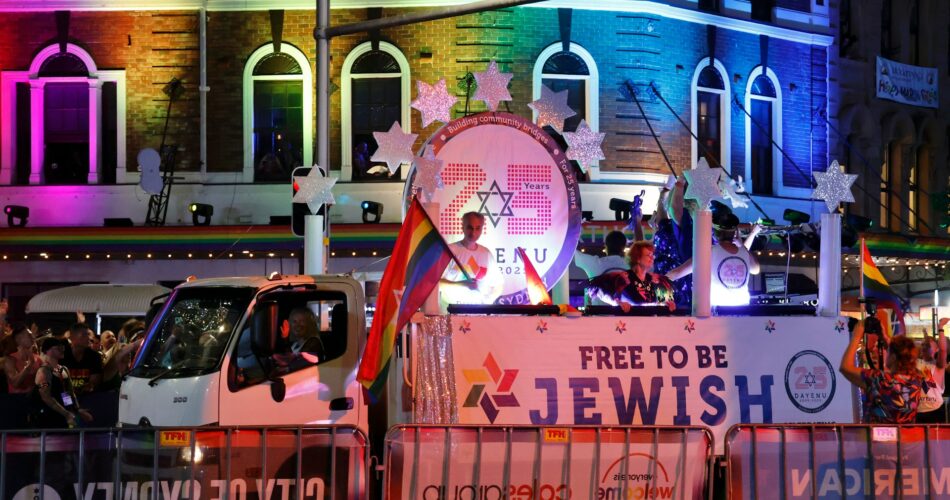
Progressive Jewish leaders largely reject sexual-orientation and gender-identity change efforts, while some Orthodox activists continue to promote sexual abstinence or opposition to gender transition.
The Jewish ex-gay movement suffered a major defeat in 2015 when a New Jersey jury found JONAH (Jews Offering New Alternatives to Homosexuality) liable for consumer fraud. Yet conservative Jewish advocacy for suppressing same-sex relationships and transgender identities continues.
The debate now extends beyond conventional conversion therapy to lifelong celibacy, religiously directed counseling, and opposition to gender transition.
JONAH and Its Successor
Founded in 1999, JONAH promoted reparative therapy, claiming that unwanted same-sex attraction could be overcome through psychological treatment. Co-founder Arthur Goldberg was a convicted felon in his former career as a Wall Street municipal bonds manager.
After its 2015 consumer-fraud court defeat, JONAH was ordered dissolved, yet its direct successor, the Jewish Institute for Global Awareness (JIFGA), continued facilitating conversion-therapy services. A New Jersey court ordered JIFGA dissolved in 2019, finding that it violated the earlier injunction. But the linked organizations’ legal dissolution did not resolve broader Jewish community disagreements over orientation and identity.
Orthodox Advocacy for Celibacy
While the Rabbinical Council of America (RCA) withdrew its endorsement of JONAH referrals in 2012, citing inadequate scientific evidence and reports of harm, its 2016 resolution on sexuality reaffirmed that same-sex relationships violate Jewish law. It acknowledged that this position demands lifelong sexual abstinence from gay Orthodox Jews without romantic companionship.
Let’s pause to notice that while mandatory celibacy is not the same as false claims of sexual orientation change, that mandate preserves the ex-gay movement’s expectation that gay people suppress sexual expression forever, even when heterosexual transformation is considered unrealistic.
Coalition for Jewish Values: A Focus on Gender Identity
The Coalition for Jewish Values (CJV), led in part by Rabbi Yaakov Menken, represents an anti-transgender evolution of conservative Orthodox advocacy.
In February 2025, CJV published a rabbinic letter on gender dysphoria, rejecting progressive Jewish understanding of the gender spectrum and requiring a rigid male-female understanding of Jewish religious obligations.
In January 2026, CJV partnered with the advocacy organization Do No Harm to publish Rethinking Gender Affirmation, a guide for rabbis, educators, and parents to deny gender variation among minors. The publication supports counseling to coerce individuals to conform their personalities and values to their birth sex.
Reform and Conservative Judaism Reject Conversion Therapy
Meanwhile, progressive Jewish opposition to conversion therapy has been explicit.
In 2015, the Central Conference of American Rabbis, representing Reform Judaism, condemned conversion therapy, invoking b’tzelem Elohim—the belief that people are created in God’s image—and pikuach nefesh, the obligation to preserve life.
In 2020, the Rabbinical Assembly, representing Conservative Judaism, condemned sexual-orientation and gender-identity change efforts, including those conducted under religious authority. Its resolution described such practices as ineffective and harmful, urging Jewish institutions to provide affirming counseling instead.
Orthodox Rabbis Declare Conversion Therapy Forbidden
In January 2026, approximately 100 Orthodox rabbis from the United States and Israel endorsed a declaration that recommending conversion therapy violates Jewish law. Signatories included Yitz Greenberg, Shmuly Yanklowitz, and Daniel Sperber.
Rabbi Yitzhak Ajzner, who helped develop the declaration, warned that conversion therapy increasingly appears under euphemisms such as “sexual orientation clarification” and “personal empowerment.” He distinguished legitimate counseling about religious conflict from attempts to change orientation.
Organizations including Eshel and Jewish Queer Youth (JQY) also provide LGBTQ-affirming alternatives within Orthodox communities.
From Conversion to Suppression
JONAH fraudulently promised heterosexual transformation. Contemporary homophobic Jewish approaches are more varied: some emphasize celibacy, while others challenge identities that don’t conform to strict masculine or feminine role expectations. All raise questions about how religious authority shapes supposedly voluntary decisions and honest self-disclosure.
Progressive Jewish advocates argue that faithfulness to Judaism need not require changing sexual orientation, rejecting LGBTQ identity, or submitting to discredited psychological treatments.
The continuing disagreements are not simply about whether conversion therapy works. They concerns whether religious communities can support LGBTQ people without demanding that they suppress and lie about fundamental aspects of their lives.